

Earlobe Filler
from £550
What Is Earlobe Filler?
Earlobe filler is a non-surgical injectable treatment that uses hyaluronic acid based dermal filler to restore volume, fullness, and shape to the earlobes. The filler is injected directly into the earlobe tissue, plumping it from within and recreating the smooth, full appearance that the lobe had when it was younger.
Hyaluronic acid is the same substance used in fillers throughout the face. It's naturally occurring in the body, fully biocompatible, and temporary. It attracts and retains moisture, which means it doesn't just add volume but also improves the hydration and texture of the skin it's placed within. If for any reason you're unhappy with the result, hyaluronic acid filler can be dissolved using an enzyme called hyaluronidase.
The filler used for earlobes is a soft, pliable product that integrates smoothly with the delicate tissue of the lobe. It needs to feel natural to the touch, as earlobes are frequently handled when putting on or removing earrings, and any hardness or lumpiness would be immediately noticeable.

What Can Earlobe Filler Treat?
Earlobe filler is versatile and can address a range of concerns that affect the appearance of the ears.
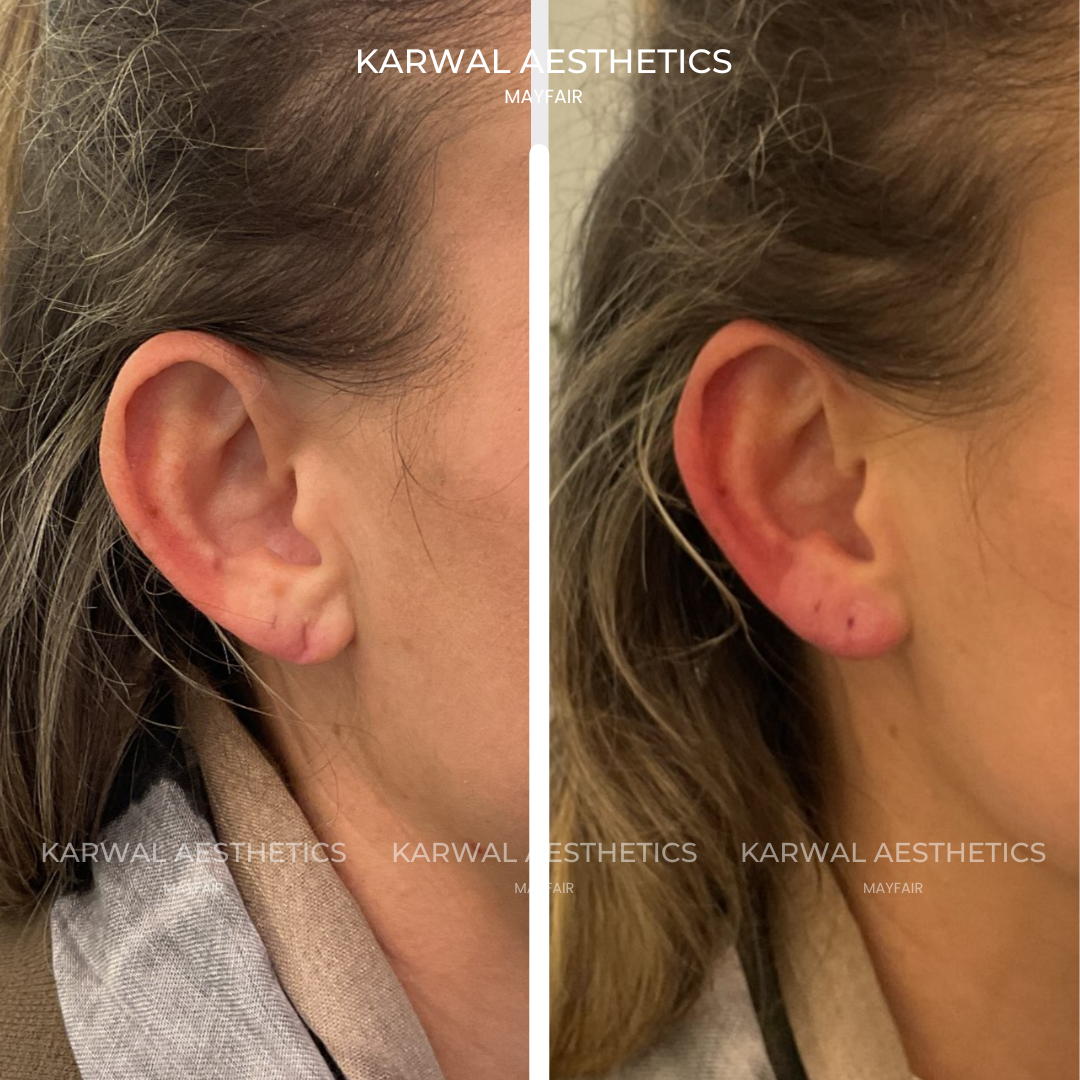
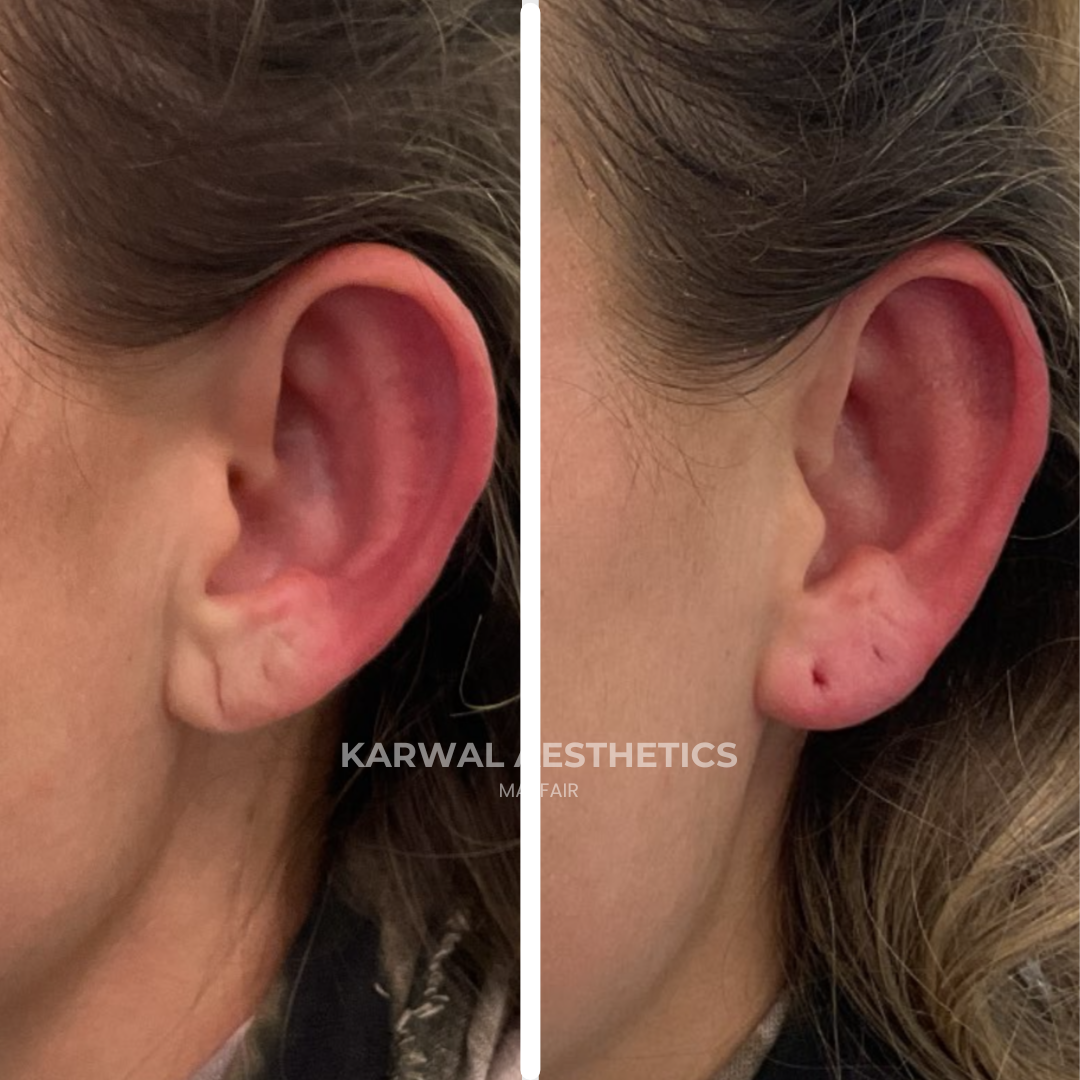
Thin, deflated earlobes are the most common reason patients seek this treatment. Ageing, genetics, and weight loss can all cause the earlobes to lose their natural fullness, leaving them looking papery, flat, and aged. Filler restores the volume from within, creating a plumper, healthier looking lobe.
Wrinkled or creased earlobes develop as the skin loses collagen and elastin. Fine lines and creases across the surface of the earlobe can make them look noticeably aged, even if the rest of your face is well maintained. Filler smooths out these wrinkles by plumping the tissue beneath them.
Stretched piercings are extremely common in patients who have worn heavy earrings over many years. The piercing hole gradually widens and the surrounding tissue thins, which can make earrings hang unevenly or look like they're pulling on the lobe. Filler can thicken the tissue around the piercing, providing better support and improving how earrings sit.
Asymmetrical earlobes can occur naturally or develop over time if one ear has been subjected to more stretching or damage than the other. Filler can be used to balance the two sides, creating a more symmetrical appearance.
Elongated earlobes that have stretched downward with age can be improved with filler, though the degree of correction depends on the extent of the elongation. For mild to moderate lengthening, filler can add volume and structure that counteracts the drooping effect. For severe elongation or complete tears, a surgical earlobe repair may be more appropriate.
Earlobes that can no longer support earrings are a common frustration. When the tissue has thinned to the point where earrings pull uncomfortably, tilt forward, or won't sit properly, filler can restore enough volume and structure to make wearing earrings comfortable and attractive again. For many patients, this is the primary motivation for seeking treatment.
FAQs
-
This is one of the most frequently asked questions, and understandably so, since many patients are having the treatment specifically to improve how their earrings look and feel.
It's best to avoid wearing earrings for at least one week after treatment, and ideally two weeks. This gives the filler time to settle into position without being disturbed by the weight or pressure of earrings. Inserting and removing earrings in the first few days could also introduce bacteria to the injection sites before they've fully healed.
Going forward, it's worth being mindful about very heavy earrings. While the filler provides excellent support, consistently wearing very heavy pieces will continue to stretch the tissue over time, which can shorten the longevity of your result.
-
Results typically last between 6 and 24 months, though some patients find their results last longer, particularly with repeat treatments.
The earlobes are subject to constant micro movements from daily activities like handling earrings, sleeping on your side, and touching your ears. This can cause the filler to metabolise slightly faster than it might in a more static area of the face. However, because the earlobes are relatively small and the volume of filler used is modest, the breakdown is very gradual and the transition back is subtle.
With consistent treatment over time, many patients find that the earlobes retain their improved shape for progressively longer periods. The filler can stimulate some collagen production in the surrounding tissue, which means the baseline quality and volume of the earlobe may improve even beyond what the filler itself provides.
Most patients choose to top up their earlobe filler every 9 to 18 months to maintain their result. Some find they can comfortably go longer between treatments, particularly if they're careful with heavy earrings and general earlobe care.
-
Several factors influence the longevity of earlobe filler.
Your metabolism plays a role, as it does with all hyaluronic acid fillers. People who metabolise filler quickly will find the results don't last as long. This is a natural biological variation and isn't something you can control.
How you treat your earlobes after the procedure matters. Consistently wearing very heavy earrings, sleeping on one side, or frequently handling and tugging the earlobes can accelerate how quickly the filler breaks down. Being mindful about these habits can extend the life of your result.
The volume of filler placed also plays a role. Very small amounts may be metabolised faster than a more adequate volume. Dr Karwal will recommend the right amount during your consultation to balance a natural result with good longevity.
Lifestyle factors like smoking, excessive sun exposure, and chronic dehydration can all affect how long hyaluronic acid filler lasts in the body.
-
Earlobe filler is suitable for a wide range of patients and concerns. You may be a good candidate if your earlobes have thinned or deflated with age, if years of wearing earrings have stretched your piercing holes or thinned the surrounding tissue, if your earlobes are wrinkled, creased, or have a papery appearance, if your earlobes are asymmetrical and you'd like better balance, if you've stopped wearing earrings because your lobes can no longer support them properly, if you want fuller, more youthful looking earlobes without surgery, or if you've experienced weight loss that has affected the volume of your earlobes.
The treatment is suitable for both men and women, and there's no upper or lower age limit, though the majority of patients seeking earlobe filler are in their 40s and older.
Earlobe filler may not be appropriate if you have an active infection in or around the ear, if you have a history of severe allergic reactions to hyaluronic acid products, if you're pregnant or breastfeeding, or if your earlobes are severely torn (in which case surgical earlobe repair may be more appropriate, and Dr Karwal can advise on this during your consultation).
-
Earlobe filler is a very safe procedure with a low risk profile, particularly when performed by an experienced practitioner. However, like any injectable treatment, there are some potential side effects to be aware of.
Common and expected side effects include mild swelling, tenderness, and slight redness at the injection sites. These are temporary and typically resolve within a day or two. Minor bruising is possible but uncommon.
Less common side effects include small lumps or irregularities in the filler, which can usually be smoothed out with gentle massage or addressed at a follow up appointment. Asymmetry between the two earlobes can occur but is typically corrected easily. Infection is a rare risk with any injectable procedure and is minimised by proper skin preparation and aftercare.
Serious complications are extremely rare with earlobe filler. The earlobes have a rich blood supply and are anatomically much simpler than areas like the nose, temples, or under the eyes. Vascular complications, which are a concern in other facial areas, are exceptionally unlikely in the earlobes.
If you experience anything unusual after treatment, such as increasing pain, significant swelling, changes in skin colour, or signs of infection, contact the clinic immediately.
-
The procedure is one of the simplest and quickest injectable treatments we offer. Here's what happens from start to finish.
Dr Karwal begins by assessing your earlobes, discussing your concerns, and determining the best approach. He'll look at the volume, shape, skin quality, and any stretching or asymmetry, and explain what filler can realistically achieve for your specific situation.
The earlobes are then cleansed with an antiseptic solution. A topical numbing cream may be applied, though many patients find the earlobes are relatively comfortable to treat without it. The filler itself also contains lidocaine, which numbs the area progressively as it's injected.
Using a fine needle, Dr Karwal injects small amounts of filler into the earlobe tissue. The filler is placed strategically to restore volume where it's been lost, thicken areas of thinning, and improve the overall shape and contour. He will gently mould the filler after injection to ensure it's evenly distributed and the earlobe feels smooth and natural.
The process is then repeated on the other ear, with careful attention to symmetry between the two sides.
The entire treatment typically takes between 15 and 20 minutes for both ears. It's genuinely one of the quickest procedures we perform, and most patients are surprised by how straightforward it is.
-
Most patients find earlobe filler very comfortable. The earlobes have relatively few nerve endings compared to areas like the lips, so the procedure is well tolerated even without heavy numbing.
The filler contains lidocaine, which provides progressive numbing as it's injected. You'll feel a slight pinch as the needle enters the skin and some pressure as the filler is placed, but most patients describe the sensation as mild and very manageable.
A topical numbing cream can be applied beforehand if you'd prefer additional comfort, though many patients find it isn't necessary. The treatment is quick enough that any discomfort is over before it becomes an issue.
-
Aftercare for earlobe filler is straightforward and easy to follow.
For the first 24 to 48 hours, avoid touching, pressing, or squeezing your earlobes. Don't wear earrings. Avoid sleeping directly on your ears if possible, and try not to hold your phone pressed against the treated ear. Avoid intense exercise, alcohol, saunas, and extreme heat.
For the first week, continue to avoid earrings if possible, or switch to very lightweight studs if you need to wear something. Be gentle when washing around your ears. Don't apply skincare products directly to the earlobes. Avoid any treatments or procedures on or around the ears.
For the first two weeks, avoid heavy or dangling earrings. Don't have any piercings done in the treated area. Continue to be gentle when touching or handling your earlobes.
After two weeks, you can return to wearing earrings as normal, though it's always wise to limit very heavy pieces to special occasions rather than daily wear if you want to preserve your result for as long as possible.
-
You'll find us at 15 Dover Street, London W1S 4LP, in the heart of Mayfair, Central London. We're ideally situated for clients travelling from across London and beyond, with excellent transport links nearby. Book your consultation today.
-
Most people don't give their earlobes much thought until they notice something has changed. But like every other part of the face and body, earlobes are subject to the ageing process, and they can change more dramatically than you'd expect.
The earlobes are made up almost entirely of soft tissue, fat, and skin. Unlike most of the face, there's no bone or cartilage providing structural support. This means the earlobes are entirely reliant on the quality and volume of their soft tissue to maintain their shape. When that tissue changes, the earlobes change with it.
As we age, the body's production of collagen and elastin declines. These are the two proteins responsible for keeping skin firm, plump, and resilient. As they diminish, the skin of the earlobes becomes thinner, looser, and less able to hold its shape. The small amount of fat within the earlobe can also reduce over time, contributing to a deflated, papery appearance.
Gravity plays a constant role. The earlobes hang freely, which means they're subject to a gentle but unrelenting downward pull every day. Over decades, this causes them to elongate and thin, particularly if they've been bearing the weight of earrings.
Heavy earrings are one of the most significant accelerating factors. Years of wearing statement earrings, hoops, or heavy drops stretches the tissue of the earlobe, widening the piercing hole and thinning the surrounding skin. In some cases, this can lead to partially or fully torn earlobes, where the piercing has stretched all the way to the edge of the lobe.
Genetics also play a role. Some people are born with naturally thin or small earlobes that become more pronounced with age. Others have lobes that were always full but have thinned due to the factors above. Either way, the result is the same: earlobes that look aged, deflated, or disproportionate.